Governance, Risk, and Compliance · GRC Automation · STORM GRC
Why GRC Programs Fail to Scale
Most GRC programs don’t fail because of risk—they fail because their GRC automation and processes don’t scale.
Most organisations don’t lack policies; they struggle to manage risk with processes that no longer scale.
As businesses become more digital, interconnected, and regulated, traditional approaches (i.e., spreadsheets, emails, and fragmented tools) no longer hold up under operational and regulatory demands. They can’t keep up with the speed, complexity, and level of accountability required today.
Risk evolves faster than manual processes can support. Regulatory expectations continue to rise, driven by frameworks such as the NIS2 Directive, while audits increasingly demand clear, real-time evidence of control.
When governance fails, the impact is immediate: operational disruption, compliance exposure, financial loss, and reputational damage.
Automation is no longer optional. It is what enables sustainable control.
Why GRC Has Become Harder to Manage
The issue isn’t that organisations don’t understand risk. It’s that the environment they operate in has changed rapidly.
Cloud infrastructure, AI, interconnected systems, external suppliers, and digital services have expanded the attack surface and created new dependencies across the business. At the same time, regulations such as NIS2, DORA, GDPR, and sector-specific requirements are pushing organisations to prove they have control, not just document it.
In practice, this creates operational friction across the organisation. Risk information is often outdated by the time it’s reviewed. Audit evidence sits across multiple teams and systems. Compliance work gets duplicated. Supplier risks are assessed once and then not revisited. Reporting is more time-consuming than necessary, and decisions are made without a clear, current view of exposure.
In many cases, the process itself becomes the biggest source of risk.
The Limits of Manual GRC
Many organisations still manage GRC through a mix of spreadsheets, documents, emails, and isolated tools. While this approach may work initially, it does not scale.
This is what makes GRC reactive. Issues are discovered late. Teams spend more time gathering information than actually acting on it. And as regulatory pressure increases, the whole model becomes harder to maintain.
For organisations trying to maintain an effective ISMS aligned with ISO 27001, support audits, and manage supplier risk, this approach doesn’t hold up for long.
What a Modern GRC Platform Should Deliver
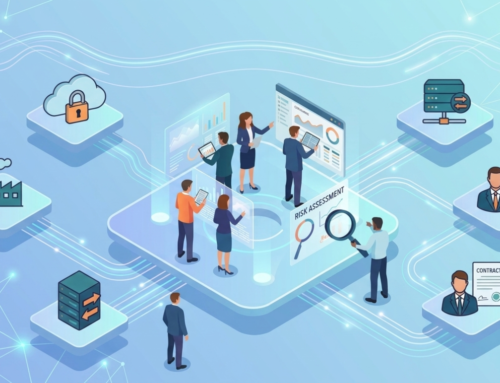
A modern GRC platform should do more than centralise documents. It should give organisations a structured way to manage governance, risk, compliance, and resilience across the business.
That means bringing risk management, compliance tracking, policies, audits, incidents, suppliers, and business continuity into one environment. It also means mapping controls across frameworks like ISO 27001, NIS2, GDPR, and DORA, so teams aren’t repeating the same work over and over.
Most importantly, it should replace fragmented visibility with a single source of truth.
When that happens, organisations gain clarity. They can identify where the most significant risks exist, which assets matter most, how effective your controls actually are, and which suppliers introduce the highest exposure. More importantly, they can clearly identify what requires attention, without manual consolidation or effort.
Why GRC Automation Matters
This is where GRC automation makes a measurable difference by removing reliance on manual updates.
Instead of treating GRC as a periodic exercise, automation turns it into something continuous. Teams don’t have to chase updates or manually compile reports—they can rely on workflows, dashboards, and structured data that stays current.
The impact is immediate and measurable.
Just as important, automation brings consistency. When processes are standardized, there’s less room for error, less duplication, and clearer accountability across teams.
It doesn’t just save time—it makes the whole system more reliable.
From Compliance Burden to Business Value
At this stage, a clear shift occurs. GRC shifts from a compliance obligation to a core business capability.
With the right platform in place, leadership gets a clearer view of risk. Compliance teams spend less time on manual work. Security and audit teams work from the same data instead of reconciling different versions of reality.
And stakeholders (internal and external) gain confidence that governance isn’t just documented, but actually working.
That’s where the real value is. Not just in passing audits, but in having control.
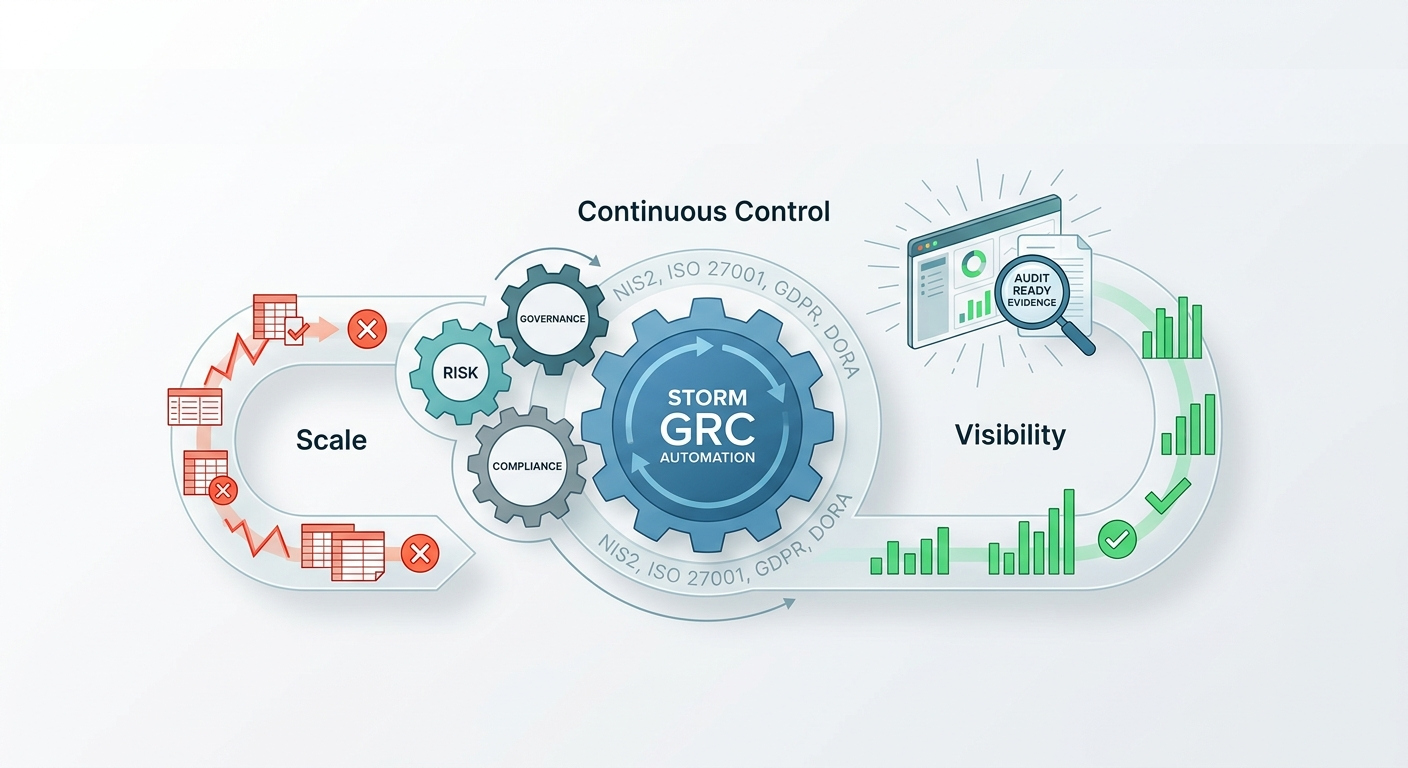
At ICT Protect, our STORM GRC platform powers a comprehensive approach to governance, risk, and compliance, enabling organisations to manage complexity, reduce risk, and stay audit-ready.
Why STORM GRC
STORM GRC is built for organisations that need more than static compliance tracking.
It replaces spreadsheets, disconnected tools, and manual coordination with a secure, cloud-native platform that brings governance, risk, and compliance into one place. Instead of working across separate systems, teams get a unified view of risks, controls, audits, incidents, suppliers, and business continuity.
STORM GRC provides real-time visibility into your GRC posture through centralised dashboards, automated workflows, and executive-ready reporting. In practice, that means you can identify critical risks earlier, track compliance in real time, and approach audits without last-minute pressure or weeks of manual preparation.
It supports frameworks such as ISO 27001, NIS2 Directive, GDPR, and others through integrated cross-mapping, helping reduce duplication and simplify compliance across multiple requirements.
The result is a platform that helps organisations move from fragmented oversight to continuous control—giving them the clarity, speed, and confidence needed to manage risk in a complex environment.
To see how this works in practice, request a demo or get in touch with our team to learn more.